1. Variety Characteristics
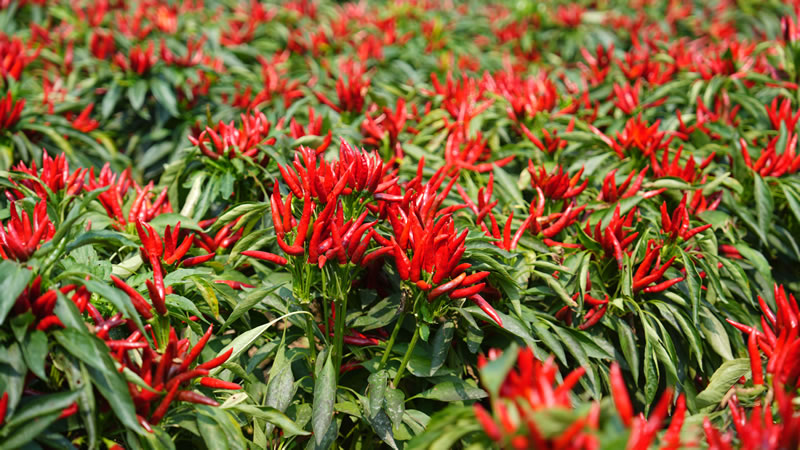
l Mid-early maturing, cluster-bearing, large-fruited facing-heaven chili variety.
l Moderate growth vigor, with 9-11 lateral branches and stiff stems. Exhibits excellent fruit clustering.
l Plant height approximately 59 cm, plant spread about 58 x 58 cm.
l Initial flowering node around the 12th node, with pronounced purple nodes and dark green leaves.
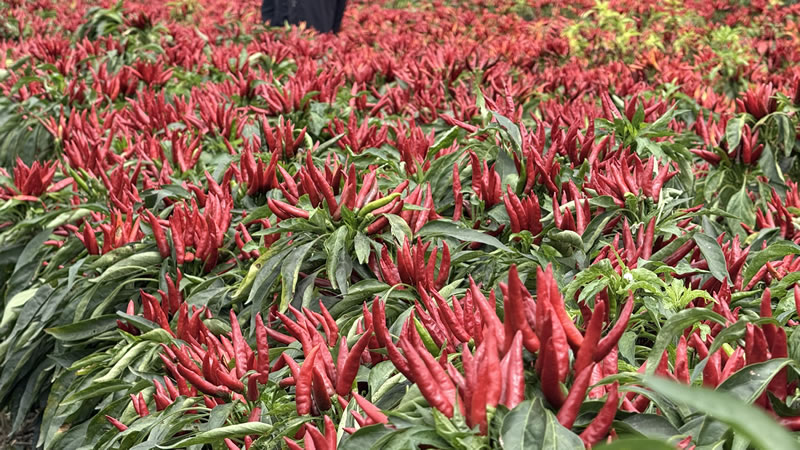
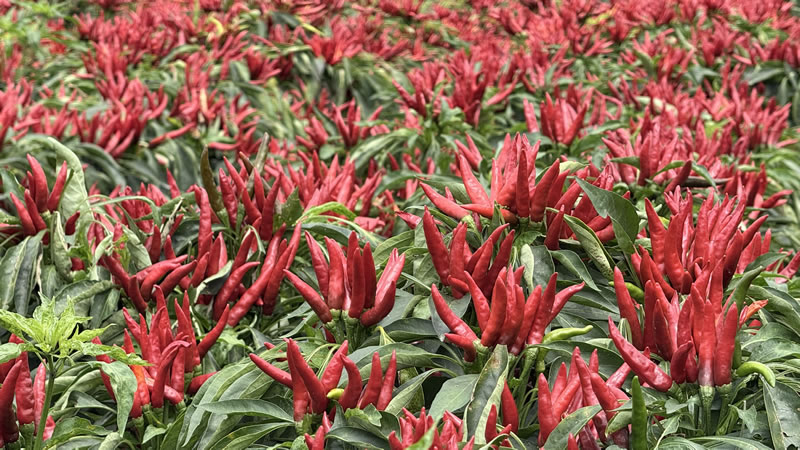
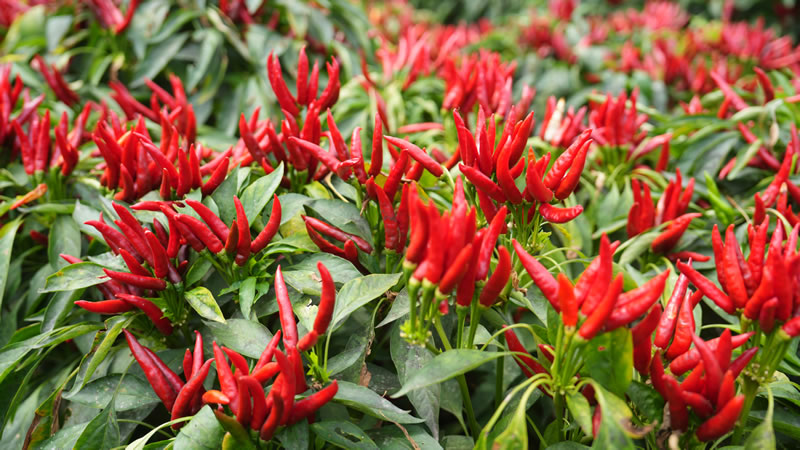
l Fruit is finger-shaped, approximately 10.0 cm long, 1.3 cm wide, with a flesh thickness of about 0.15 cm. Average single fruit weight is 8.2g.
l Immature fruit is green, maturing to red. High number of fruits per cluster.
l Fruit is easy to dry; dried peppers have high oil content, making them suitable for drying and processing.
2. Seedling Time and Method in the Huang-Huai-Hai Region of China
l Small Arch Shelter Seedling Raising: Optimal sowing time is from late February to early March.
l Greenhouse Plug Tray Seedling Raising: Sowing time is from early to mid-March.
l Transplanting Time: Late April to early May, when seedlings are 45-50 days old.
l Fresh Pepper Harvest: Fresh peppers can be harvested for market from late August to early September.
3. Cultivating Strong Seedlings
3.1 Seed Treatment
l Seed disinfection is the most economical and effective method for cultivating robust seedlings and reducing seedling diseases. Common methods include:
l Sun-drying seeds for 1-2 hours before sowing.
l Chemical treatment.
l Warm water immersion.
3.2 Sowing
l Select a seedbed site that is sheltered from wind, sunny, flat, dry, and well-drained.
l Strictly avoid using land previously planted with peppers, tobacco, eggplants, tomatoes, or other solanaceous vegetables for seedling raising.
3.3 Seedling Management
Temperature Control:
l After sowing: Maintain 20-28°C during the day and 18-20°C at night. Soil temperature in the seedbed should not be lower than 18°C.
l After emergence: Maintain 18–25°C during the day and 10–15°C at night.
l If temperatures are too low, cover with straw curtains for insulation and cold protection. If too high, ventilate by uncovering the film.
Fertigation:
Starting from the 4-true-leaf stage, irrigate every 7-10 days with a mixture of either:
l 0.2% potassium dihydrogen phosphate and 0.2% multi-element compound fertilizer, or
l 0.2% urea plus 0.2% potassium dihydrogen phosphate.
Water Management:
l Before the 4-leaf stage: Water sparingly, focusing on control.
l During the 6-8 leaf stage: Ensure adequate water supply, focusing on promotion.
l Before transplanting: Control watering to make the seedlings sturdy and robust.
4. Timely Transplanting
l Upright chilies prefer moisture but are susceptible to waterlogging. Choose loamy, sandy loam, or clay loam soil that retains fertilizer, is loose, and well-aerated.
l Seedlings should be lifted, transplanted, and watered promptly and without delay.
5. Field Management
5.1 Water Management
l Upright chilies have shallow root systems, weak stress resistance, and are susceptible to both drought and waterlogging. They prefer a moist ecological environment and require relatively high soil moisture content.
l Principle: Keep the soil moist but not waterlogged, allowing it to appear dry shortly after being wet.
l Water when dry, drain when waterlogged. Irrigate frequently with small amounts of water to maintain soil moisture. Avoid flood irrigation.
5.2 Timely Topping (Pinching)
Topping is essential when plants begin to bud in late May.
l Purpose 1: To inhibit main stem growth and promote lateral branch sprouting, thereby increasing yield.
l Purpose 2: If not topped, the first fruit cluster is highly prone to disease and rot, which can lead to severe crop reduction from field-wide disease.
5.3 Scientific Topdressing
l Principle: Use balanced compound fertilizer in the early stage, balanced N-P-K fertilizer during the mid-stage peak fruiting period, and high-potassium compound fertilizer in the later stage.
l Apply a "fruit-setting fertilizer" at the initial flowering stage, typically 10-15 kg of N-P-K compound fertilizer per 667m2.
l After fruit set, foliar fertilizers such as potassium dihydrogen phosphate, calcium, and boron can be sprayed in combination with disease control to promote robust plant growth and enhance disease resistance.
6. Pest and Disease Control
l Common diseases: Damping-off, viral diseases, Phytophthora blight, root rot, etc.
l Common pests: Aphids, thrips, whiteflies, tobacco budworms, spider mites, etc.
l General principle: Prevention first, integrated control.
7. Timely Harvesting
l The harvesting time depends on the purpose.
l For fresh consumption: Harvest green peppers upon maturity based on market conditions.
l In this region, harvesting for drying is primary. Generally, harvest after the peppers have fully turned red and before the first frost.



 阿里旺旺客服